The ubiquity of the döner kebab in Germany is no historical accident; it is the result of a perfect cultural and culinary convergence. While many associate German food with bratwurst or schnitzel, the döner has surpassed them to become the nation’s unofficial national dish. This popularity stems from its unparalleled combination of affordability, speed, and nutritional balance, offering a hot, protein-rich meal that fits seamlessly into the fast-paced lifestyle of modern German cities. Unlike typical American fast food, the döner feels like a “real” meal, packed with fresh salad and grilled meat, making it the ultimate comfort food for everyone from students to busy professionals.
The roots of this phenomenon trace back to the “Gastarbeiter” (guest worker) era of the 1960s and 70s, when Turkish immigrants reimagined the traditional plated Iskender kebab into a portable sandwich to suit the German “on-the-go” culture. West Berlin, specifically the Kreuzberg district, became the epicenter of this transformation. By tucking seasoned meat into a toasted pide bread and topping it with garlic or herb sauces, Turkish entrepreneurs created a bridge between two cultures. This fusion was embraced by the local population, not just as a foreign delicacy, but as a local staple that represented the new, multicultural identity of post-war Germany.
Beyond its cultural significance, the döner industry in Germany is a powerhouse of consistency and accessibility. With over 16,000 kebab shops across the country, you are rarely more than a few blocks away from a rotating vertical spit. This high level of competition has kept prices relatively low and quality standards high, ensuring the döner remains the most democratic food option available. Its status is now so cemented in the German zeitgeist that it frequently appears in political discourse and pop culture, serving as a flavorful symbol of integration and the evolving German palate.
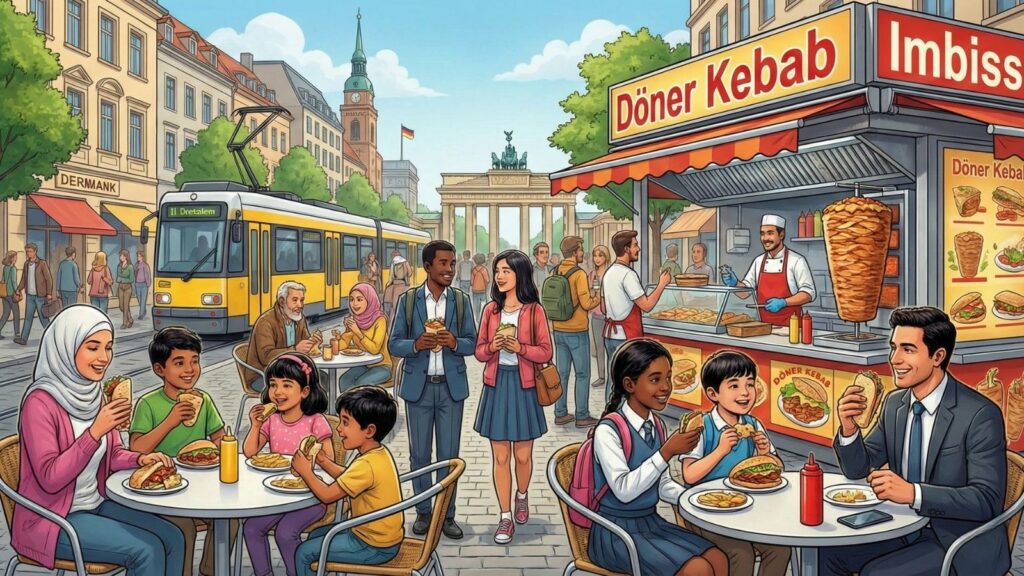
Turkish Immigration and Cultural Exchange
Turkish immigration to Germany, which began in the 1960s, marked the start of a transformative cultural exchange between the two nations. Initially arriving as guest workers to support Germany’s booming post-war economy, Turkish immigrants brought with them not only their labor but also their rich cultural heritage. Among the most notable aspects of this exchange was Turkish cuisine, with döner kebab becoming a culinary phenomenon that went far beyond its humble beginnings.
Döner kebab, originally a traditional Turkish dish featuring seasoned meat cooked on a vertical rotisserie, quickly adapted to the German fast-food culture. Turkish immigrants in Berlin reimagined the dish, serving it in pita bread with fresh vegetables and tangy sauces, making it a convenient, flavorful, and affordable meal. This adaptation allowed döner to appeal to a diverse customer base, transforming it from a cultural specialty to one of Germany’s most beloved street foods.
Beyond just a culinary success, döner kebab symbolizes the broader impact of Turkish immigration on German society. It is a testament to how cultural exchange can reshape local traditions, creating something new while preserving its roots. Today, döner stands as a symbol of multiculturalism, reflecting how Turkish cuisine has enriched German food culture and how two societies can blend to create shared culinary experiences.
Döner Shops on Almost Every Corner
Walking through the streets of any major German city, it is nearly impossible to miss the sight of döner shops. From bustling metropolitan areas to quiet suburban neighborhoods, these small eateries have become a defining feature of Germany’s urban landscape. The sheer number of döner shops is a testament to the popularity of this Turkish delicacy, which has seamlessly integrated into German cuisine. What began as a culinary adaptation by Turkish immigrants has now evolved into an iconic part of the country’s fast-food culture.
The rise of döner shops on almost every corner is a direct reflection of their accessibility, affordability, and universal appeal. Each shop offers its own twist on the classic recipe, with variations in spices, sauces, and ingredients that cater to local tastes. This diversity within a single dish has made döner an incredibly adaptable and customizable meal, attracting a wide range of customers, from busy professionals looking for a quick lunch to late-night diners craving a satisfying bite.
Beyond their culinary appeal, döner shops have become social hubs, places where different communities come together. They are run by both Turkish immigrants and local entrepreneurs who have embraced this beloved dish. In many ways, döner shops symbolize the multicultural spirit of Germany, where flavors from different cultures can find a place and thrive, creating a shared experience for everyone.
The History of Doner Kebab in America
The journey of döner kebab to America is a story of cultural exchange and culinary evolution. While döner has its roots in the Ottoman Empire and became an iconic street food in Germany, it reached American shores through waves of immigration. Turkish and Middle Eastern immigrants brought their rich culinary traditions, including döner, introducing it to a new audience eager to explore international flavors. Initially, döner was found in small, family-owned restaurants, offering an authentic taste of Turkish cuisine.
In the United States, döner kebab underwent transformations to suit local tastes and preferences. What was once a simple dish of spiced meat cooked on a vertical rotisserie evolved into a more diverse offering. Some establishments began serving it in pita bread with fresh vegetables, while others introduced it as a wrap, sandwich, or even a bowl. This versatility allowed döner to thrive in a competitive food market, appealing to health-conscious consumers, casual diners, and adventurous eaters alike.
Today, döner kebab is not only a popular choice in major American cities but also a growing trend across the country. It is served in traditional Turkish restaurants, trendy food trucks, and fast-casual chains that embrace its global appeal. The success of döner kebab in America is a testament to its adaptability, offering a perfect balance of flavor, convenience, and cultural heritage.
Where to Buy Doner Kebab in America?
For those seeking authentic and high-quality döner kebab in America, EgeaFood stands as a trusted provider. Specializing in wholesale döner products and equipment, EgeaFood offers a convenient solution for restaurants, catering services, and event organizers looking to serve this delicious Turkish dish. With premium ingredients and a commitment to traditional flavors, EgeaFood ensures that every bite of döner is a true culinary experience.
EgeaFood provides more than just top-quality döner kebab. It also offers essential equipment, including vertical rotisseries, knives, and other tools required for perfect döner preparation. This makes it a one-stop solution for businesses aiming to serve authentic döner with ease and efficiency. Whether you are a small family restaurant or a large catering service, EgeaFood’s products are designed to meet your needs and maintain consistent quality.
In addition to its wholesale services, EgeaFood is a perfect choice for those organizing special events. With its ready-to-serve döner options, you can impress your guests with mouthwatering flavors and a unique culinary experience. From weddings and corporate events to food festivals, döner kebab from EgeaFood adds a touch of Turkish cuisine that is sure to leave a lasting impression.