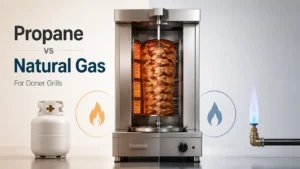
Kebab shops typically use commercial-grade charcoal grills, gas grills, or electric grills designed to handle high heat and continuous cooking. These grills are built with durable stainless steel bodies, adjustable heat controls, and wide grilling surfaces to cook multiple skewers at once. Charcoal models are preferred for their authentic smoky flavor, while gas and electric options offer faster heat-up times and easier temperature management.
The type of grill chosen often depends on the style of kebab served and the speed of service required. Restaurants aiming for a traditional taste tend to use open charcoal grills with a vertical or horizontal skewer system, allowing the meat to cook evenly while retaining its juices. For high-volume operations, gas grills with infrared burners or rotating spits help maintain consistent results throughout the day.
Many kebab shops also customize their grills with features like drip trays to collect excess fat, adjustable skewer holders for different meat sizes, and heat-resistant glass fronts to showcase the cooking process to customers. These details not only improve cooking efficiency but also enhance the visual appeal, attracting customers with the aroma and sight of freshly grilled meat.
Most Common Types of Grills Used in Kebab Shops
Commercial kebab shops often rely on three main types of grills to meet their cooking needs: charcoal, gas, and electric. Charcoal grills remain a favorite among traditional establishments because they deliver an unmistakable smoky aroma and deep flavor that many customers associate with authentic kebabs. They are typically built from heavy-duty materials to withstand high temperatures and frequent use, making them a long-term investment for restaurants that prioritize flavor over speed.
Gas grills have gained popularity in busy shops where speed and consistency are essential. With precise temperature controls and even heat distribution, they allow chefs to cook multiple skewers at once without constantly monitoring the flames. Many gas models include infrared burners, which help sear meat quickly while locking in juices, making them an efficient choice for high-demand environments.
Electric grills, while less common in traditional settings, are increasingly used in modern or indoor-focused kebab shops due to their convenience and compliance with ventilation restrictions. They heat up quickly, require minimal cleanup, and are easier to operate for less experienced staff. Whether a shop chooses charcoal, gas, or electric, the decision often comes down to balancing flavor authenticity, cooking efficiency, and operational needs.
Speed and Convenience with Gas and Electric Grills

Gas and electric grills offer kebab shops a fast and reliable way to serve customers without compromising consistency. These grills heat up quickly, maintain stable cooking temperatures, and allow chefs to handle large orders efficiently during peak hours. Gas models are valued for their precise flame control, while electric units excel in indoor settings where ventilation is limited. Both options reduce preparation time and simplify the cooking process, making them ideal for busy establishments aiming to keep service smooth and steady.
Advantages of Gas and Electric Grills for Kebab Shops
- Quick preheating for faster service during rush hours
- Consistent temperature control for evenly cooked kebabs
- Lower maintenance compared to traditional charcoal grills
- Suitable for both high-volume outdoor and indoor operations
- Reduced smoke production for a cleaner cooking environment
- Energy-efficient models that help lower operational costs
Choosing the right grill type depends on the shop’s workflow, menu variety, and available kitchen space. Gas grills can handle high-output demands with precision, making them perfect for restaurants with a steady flow of customers. Electric grills, on the other hand, fit well in compact kitchens and urban locations where traditional open-flame cooking is not possible. By matching the grill’s capabilities to the operational needs, kebab shops can improve service speed, maintain consistent quality, and create a better overall dining experience.
Horizontal vs Vertical Skewer Systems in Kebab Cooking
Horizontal and vertical skewer systems are two distinct methods used in kebab cooking, each offering unique benefits for flavor, texture, and presentation. Horizontal systems place skewers parallel to the heat source, allowing for even exposure and precise control over browning. This method is ideal for cooking smaller skewers of meat, vegetables, or seafood, as it ensures uniform doneness and helps preserve moisture.
Vertical skewer systems, commonly seen in doner, shawarma, and gyros preparation, position the meat upright and rotate it slowly beside a heat source. This gradual roasting method allows fat and juices to baste the meat naturally as it cooks, creating a tender inside and a crisp outer layer. Vertical systems are particularly efficient for cooking large portions, making them a practical choice for shops serving continuous orders throughout the day.
Many kebab shops choose their skewer system based on menu style, cooking volume, and desired flavor profile. While horizontal systems excel in versatility and portion control, vertical systems offer a visually appealing presentation that can draw customers in. In both cases, the right equipment paired with skilled technique is essential to producing kebabs that are flavorful, consistent, and memorable for diners.
Key Features of Professional Kebab Grills
Professional kebab grills are designed with durability, heat control, and efficiency in mind, ensuring they can handle the demands of a busy kitchen. High-quality stainless steel construction is essential for resisting corrosion, retaining heat, and withstanding continuous use. Adjustable temperature controls allow chefs to manage cooking intensity with precision, while features like infrared burners or evenly spaced heating elements ensure consistent results across multiple skewers. A spacious cooking surface is equally important, enabling the preparation of large batches without compromising quality.
Additional features that enhance performance include removable drip trays for easy cleaning, skewer holders that accommodate various sizes, and heat shields that protect the chef while maintaining optimal cooking conditions. Many professional grills are also designed for energy efficiency, reducing operating costs while delivering maximum output. By combining robust build quality with thoughtful functionality, these grills not only improve workflow but also help produce kebabs with the perfect balance of texture, flavor, and visual appeal.
Choosing the Right Grill for High-Volume Service
High-volume kebab service demands a grill that can keep up with continuous orders without sacrificing quality. In such environments, speed, heat consistency, and durability become critical factors. A professional-grade grill must be able to handle large batches while maintaining the perfect sear and juiciness in every portion. Choosing a model with a wide cooking surface, precise temperature control, and even heat distribution is essential to avoid delays and ensure every skewer is cooked to perfection during peak hours.
For restaurants and catering businesses looking to combine efficiency with exceptional results, the grills offered by Egea Food provide an ideal solution. Designed for heavy-duty commercial use, these models feature robust stainless steel construction, high-output burners, and practical design elements like removable drip trays and adjustable skewer holders. Whether it’s a bustling kebab shop or a large-scale catering operation, Egea Food grills deliver the performance needed to meet high customer demand with consistent quality.

Investing in the right grill is not only about meeting current needs but also about supporting long-term growth. Egea Food’s range is built to handle daily intensive use while keeping maintenance simple and operational costs low. By equipping your kitchen with a reliable, high-capacity grill, you can improve workflow, serve more customers in less time, and ensure every plate that leaves your counter reflects the quality your brand stands for.
Importance of Durability and Material Quality in Grill Selection
Durability and material quality are critical factors in selecting a grill that will stand up to the demands of a busy commercial kitchen. A high-performance grill is not just about cooking power; it must also withstand constant use, high heat, and exposure to grease and moisture without deteriorating. Stainless steel is often the preferred choice for professional kebab grills due to its resistance to corrosion, ease of cleaning, and ability to retain heat effectively, ensuring consistent results over time.
Key Factors for Durability and Material Quality in Grill Selection
- Stainless steel construction for rust resistance and long-term use
- Heavy-duty burners designed for continuous high-heat operation
- Heat-retaining surfaces to ensure even cooking across the grill
- Welded joints and reinforced frames for structural strength
- Easy-to-clean components to maintain hygiene and extend lifespan
- High-quality temperature controls and heat-resistant handles
Investing in a grill with superior materials and craftsmanship pays off in both performance and longevity. Businesses that choose durable, well-built equipment avoid frequent repairs, reduce downtime, and maintain a consistent level of food quality for their customers. By prioritizing material strength and build quality, kebab shops can ensure their grill remains a reliable centerpiece of the kitchen for years to come.