A vertical doner grill picks up grease and charred residue fast, and if you leave it, the buildup hardens into a crust that takes twice as long to remove. Most operators lose the better part of an hour on cleaning simply because they attack the machine in the wrong order or wait until closing when everything has baked on.
The good news is that a proper clean rarely needs more than fifteen to twenty minutes once you have a system. The trick is timing, the right supplies, and knowing which parts come off and which get wiped in place.
This guide walks through a method built for busy kitchens. It keeps your grill hygienic, protects the burners and heat shields, and gets you back to prep without eating into your day.
Why a Fast Cleaning Routine Matters for Your Vertical Grill
Grease is not just a cosmetic problem. When fat and meat particles collect on the burners and reflectors, they block heat and force the grill to work harder for the same result. That means uneven cooking, cold spots on your meat cone, and higher gas or electricity bills over time.
Hygiene is the second reason speed matters. A grill left dirty overnight becomes a breeding ground for bacteria, and health inspectors look closely at these machines during checks. A quick daily wipe keeps you compliant and protects your customers.
There is also the equipment itself to think about. Hardened carbon deposits trap heat against the metal and shorten the life of your burners and shields. Keeping a vertical doner grill clean is one of the cheapest ways to stretch its working life and avoid early repairs.
Cool It Down the Smart Way Before You Start
Timing is where most people go wrong. Cleaning a fully cold grill means scrubbing rock hard grease, while a scorching hot one is a burn risk and can warp under sudden temperature changes. The sweet spot is warm.
Turn off the burners and let the unit sit for around ten to fifteen minutes. You want the surfaces cool enough to touch through a cloth but still warm enough that the grease stays soft and lifts with light pressure. This single habit can cut your scrubbing time in half.
While it cools, clear the area around the machine. Move the meat cone off if any remains, set aside your removable trays, and lay out your supplies. A few minutes of prep here saves you from stopping mid clean to hunt for a scraper or fresh cloth.
Tools and Supplies That Cut Your Cleaning Time
Having the right kit within arm’s reach is what separates a fifteen minute clean from an hour long ordeal. You do not need anything exotic, just the correct items for grease and stainless steel.
- A plastic or wooden scraper for lifting soft grease without scratching the metal
- A degreasing spray suitable for commercial kitchen equipment
- Two microfibre cloths, one for cleaning and one for drying
- A stiff nylon brush for grooves and shield edges
- Warm soapy water in a bucket or spray bottle
- Food safe sanitiser for the final wipe
- Heat resistant gloves to protect your hands on warm parts
Keep this small set in a labelled box next to the grill so nobody has to go looking. When cleaning supplies live near the machine, staff are far more likely to do a quick daily wipe instead of putting it off.
Avoid steel wool and harsh metal scourers. They scratch the surface and those tiny grooves hold grease and bacteria, which makes every future clean harder and slower.
The Step by Step Method That Beats the Clock
Once the grill is warm and your kit is ready, work through it in a set order. Following a sequence stops you doubling back and is the fastest way through the whole job.
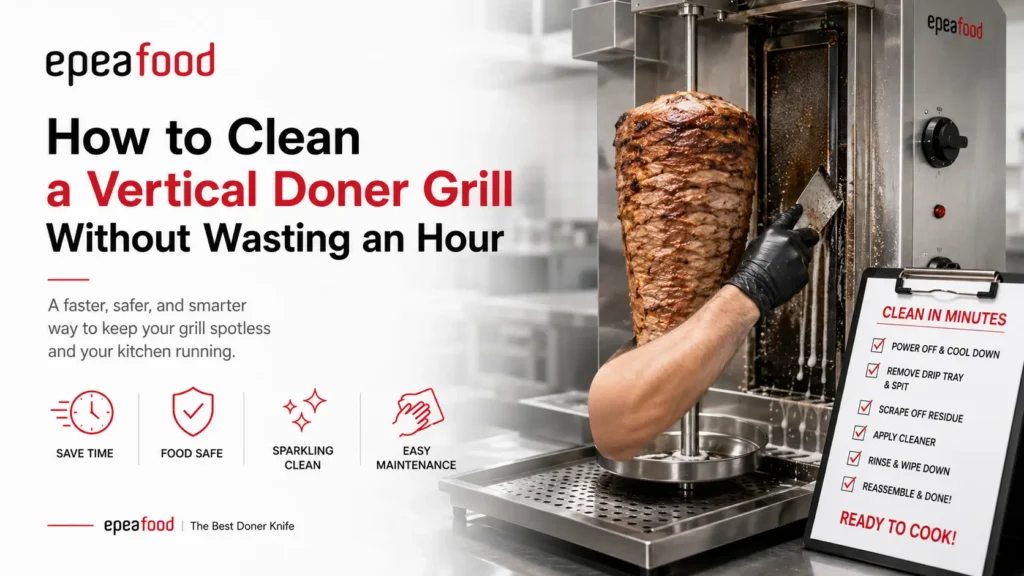
- Remove the trays, skewer parts, and any detachable shields, then set them to soak in warm soapy water
- Scrape loose grease and charred bits off the burner shields into the drip tray using your plastic scraper
- Spray the fixed surfaces with degreaser and let it sit for two to three minutes so it can break down the fat
- Wipe the loosened grease away with a microfibre cloth, working top to bottom so drips fall onto areas you have not cleaned yet
- Scrub the soaked removable parts, rinse them, and set them aside to dry
- Go over every surface with sanitiser, then dry with a clean cloth to prevent water spots and rust
- Reassemble the parts once everything is fully dry
The logic here is simple. Let the chemicals and hot water do the hard work while you handle another part of the machine, rather than standing and scrubbing one spot. That overlap is what keeps the whole routine under twenty minutes.
Tackling Grease Buildup on the Heat Shields
The heat shields and reflectors behind the burners take the worst of the splatter, and they are usually where cleaning drags on. Grease bakes onto them at high heat and turns into a stubborn dark layer that a single wipe will not shift.
Spray these areas generously with degreaser and give them longer to soak, closer to five minutes for heavy buildup. Patience here pays off, because a soaked deposit wipes away in seconds while a dry one needs minutes of hard scrubbing.
For the corners and seams where shields meet the frame, switch to your nylon brush. These tight spots trap the most residue and are easy to skip, but ignoring them means grease keeps spreading back onto the clean surfaces during the next service.
If a shield is fully removable, take it out and clean it flat on a bench. Working on a horizontal surface is faster and lets you reach both sides properly, which you cannot do while it is fixed in place inside the machine.
Cleaning the Skewer, Base Pan, and Drip Tray
These parts collect the fat and juices that run off your doner kebab cone during cooking, so they get greasy fast and need attention every single day. Left too long, the drip tray in particular turns into a hard, smelly mess.
Empty the drip tray and base pan first, disposing of the fat correctly rather than pouring it down a drain where it will cause blockages. Then let both soak in hot soapy water while you clean the rest of the machine.
The skewer and its fittings deserve a close look because they touch the meat directly. Scrub them thoroughly, rinse well, and sanitise before drying. Any food residue left on the skewer affects both hygiene and the taste of your next cone.
Once these parts have soaked, most of the grease slides off with a cloth and a little brushing. Dry them completely before putting them back, since trapped moisture is what leads to rust on these frequently wet components.
Daily Habits That Keep Deep Cleans Short
The real secret to fast cleaning is not doing less, it is doing a little every day so nothing ever builds up. A grill wiped down each night never reaches the point where it needs an hour of hard work.
Get into the routine of a quick warm wipe at the end of every service. Empty the drip tray, scrape the loose grease, and run a cloth over the main surfaces. This takes five minutes and stops deposits from hardening overnight.
Save the fuller clean, the shields and removable parts, for a set day or two each week depending on how busy you are. Splitting the work like this means no single session ever becomes a chore, and your machine always looks presentable to customers who can see it.
Training every staff member on the same simple method keeps standards consistent. When you need advice on care specific to your model, the equipment guides are a useful starting point for keeping the routine tight.
Mistakes That Waste Your Time and Damage the Grill
Some habits quietly stretch your cleaning time and wear down the machine, and they are worth knowing so you can avoid them. Speed and equipment life usually come from the same good practices.
Cleaning when the grill is stone cold is the most common mistake. Hardened grease fights back and turns a quick wipe into a long scrub, so always aim for that warm window instead. On the other end, spraying water or degreaser onto a hot grill can crack shields and is genuinely dangerous.
Using the wrong tools costs you too. Metal scourers scratch stainless steel, and those scratches hold grease that slows down every clean that follows. Harsh chemicals not meant for food equipment can leave residue and corrode parts over time.
Skipping the drying step is the last hidden time waster. Water left sitting leads to rust and streaks, and rusty parts are harder to clean and eventually need replacing. To summarise the pattern, most wasted time comes from rushing the wrong stages and dragging out the ones that a good routine makes quick. If you are choosing new machines built for easy maintenance, the equipment range is worth a look, and the team is happy to help through the contact page.
Frequently Asked Questions
How often should I clean my vertical doner grill?
Give the visible surfaces and drip tray a quick clean at the end of every service. A deeper clean covering the heat shields and removable parts is best done once or twice a week, depending on how heavily you use the machine.
Can I clean the grill while it is still hot?
No. A hot grill is a burn hazard, and spraying it with liquid can warp or crack the shields. Let it cool for ten to fifteen minutes until it is warm rather than hot, which is also when grease lifts most easily.
What is the best product for removing baked on grease?
A commercial kitchen degreaser works best. Spray it on, let it soak for a few minutes so it breaks down the fat, then wipe. Avoid steel wool, since it scratches the stainless steel and makes future cleaning slower.
Why does my grill cook unevenly after a while?
Grease buildup on the burners and heat shields blocks heat and creates cold spots. Regular cleaning restores even heat, improves your cooking results, and lowers energy use at the same time.
How do I stop the drip tray from smelling?
Empty and wash it after every service rather than letting fat sit overnight. Soaking it in hot soapy water lifts the residue quickly, and drying it fully afterwards prevents both odours and rust.