The knife you use to slice a doner cone changes everything about the final plate. It affects portion consistency, service speed, food cost, and even how the meat looks when it lands in the bread. A good slice keeps the edges crisp and the strips even, while a poor tool tears the surface and leaves waste stuck to the cone.
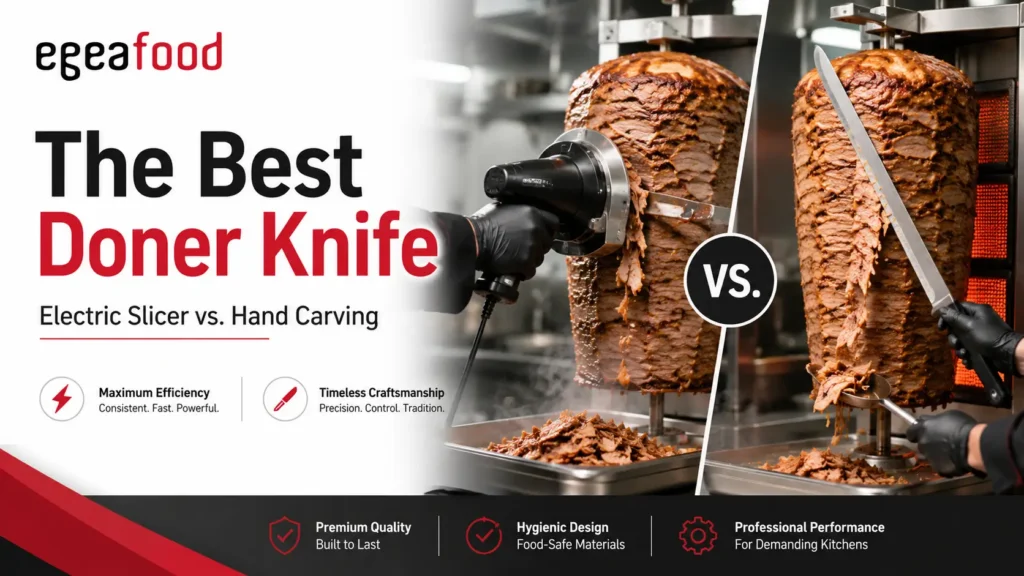
Most operators eventually face the same decision. Do you invest in an electric doner slicer that does the work for you, or do you stick with a traditional hand carving knife that gives you full control over every cut? Both approaches have loyal followers, and both are correct in the right setting.
This guide breaks down how each option performs in a real kitchen, where each one wins, and how to match the tool to your volume, your staff, and the kind of product you serve.
What Actually Separates a Doner Knife From a Regular Kitchen Knife
A doner cone is not a chicken breast or a block of cheese. The meat is stacked, vertically cooked, and constantly rotating, so the blade has to reach a tall surface and shave thin layers without dragging. That single requirement rules out most standard kitchen knives right away.
The blade length matters more than people expect. A short knife forces the carver to work in awkward angles, which leads to uneven strips and a slower rhythm during a rush. A proper doner knife carries a long, flexible blade that can travel from the top of the cone to the base in one clean motion.
Edge geometry is the other piece. You want a blade that stays sharp through hundreds of cuts a day without needing constant honing. Whether the slicing is powered or done by hand, the goal is the same: thin, even sheets of meat that fall away cleanly instead of tearing off in chunks. This is exactly why serious operators treat their doner kebab equipment as a core part of the setup rather than an afterthought.
How Electric Doner Slicers Work and Where They Earn Their Keep
An electric slicer clamps onto the vertical rotisserie and uses a spinning or oscillating blade to shave the meat automatically. The operator guides it down the cone, and the machine handles the actual cutting. The appeal is obvious the first time you watch one clear a busy line.
Speed is the headline benefit. During peak hours, an electric slicer keeps portions moving without tiring out your staff. A cook who would normally slow down after the fiftieth carve stays just as fast on the two hundredth, because the machine is doing the physical work.
Consistency is the quiet advantage. Because the blade angle and pressure stay uniform, the strips come off at a steady thickness. That predictability makes portion control easier, which protects your food cost over a full shift. When every serving weighs roughly the same, your margins stop leaking through oversized scoops.
Electric units do come with trade offs. They need charging or a power source, they add a cleaning routine at the end of the night, and they represent a real upfront cost. For high volume shops running a steady stream of doner kebab orders, that investment usually pays for itself fast. For a small operation carving a single cone a day, it can sit unused more than it earns.
Hand Carving Knives and the Case for Doing It the Old Way
There is a reason skilled carvers still swear by a long blade and a steady hand. Hand carving gives you a level of feel that no machine offers. You sense when the meat is crisp on the outside and softer underneath, and you adjust your cut in real time to serve the best part of the cone.
Control is the whole point. A good carver can pull long, delicate ribbons for a premium plate, then switch to shorter, thicker strips for a wrap without changing tools. That flexibility is hard to match with a fixed blade angle. For products like gyro and shawarma, where the texture and presentation carry a lot of weight, that hands on touch can be the difference between an average serving and one people remember.
The cost side is friendly too. A quality carving knife is a fraction of the price of an electric unit, and it never needs a battery. It cleans up in seconds and lasts for years with basic care. For a new shop watching every expense, that simplicity is genuinely valuable.
The catch is the human element. Hand carving depends entirely on skill, and it wears people down during long rushes. If your team turns over often or your line gets slammed at lunch, the quality can swing from one carver to the next. Briefly put, hand carving rewards experience and punishes shortcuts.
Electric Slicer vs. Hand Carving: The Honest Comparison
Instead of crowning one winner, it helps to see how the two stack up against the factors that actually shape your day. Here is where each option pulls ahead.
- Speed under pressure: The electric slicer wins during rushes, holding a steady pace no matter how tired the crew gets. Hand carving keeps up only as long as the carver stays fresh.
- Portion consistency: Electric slicing edges out hand work because the blade keeps a uniform thickness, which tightens your food cost. A skilled carver can match it, but not every shift and not every employee.
- Upfront cost: Hand carving is the clear budget choice. A good knife costs a small fraction of a powered unit and needs no charging or replacement parts.
- Presentation and feel: Hand carving takes this one. The carver reads the cone and pulls the exact cut a dish needs, which matters for premium plates.
- Training time: The electric slicer lowers the skill barrier, so a new hire becomes useful faster. Hand carving demands weeks of practice before the cuts look right.
- Cleaning and upkeep: The knife is simpler, wiping down in seconds. The electric unit needs a proper cleaning routine and occasional maintenance.
In short, the electric slicer is built for volume and consistency, while hand carving is built for control and low cost. Neither is wrong, and plenty of busy kitchens keep both within reach.
Matching the Tool to Your Business Volume
The right choice usually comes down to how many cones you go through in a day. Volume is the single most useful number when you are deciding where to put your money, so it is worth being honest about your traffic before you buy anything.
A small cafe or a food truck carving one cone across a shift rarely needs a powered slicer. A skilled hand and a solid knife will serve every customer well and keep your costs down. Spending big on a machine that sits idle most of the day is money you could put into better meat or a second cone instead.
A mid sized restaurant with a steady lunch and dinner crowd sits in the interesting middle. Here, many operators keep a hand knife for calm hours and reach for the electric slicer when the line stretches to the door. That hybrid setup gives you the feel of hand carving when you have time and the speed of a machine when you do not.
High volume operations and franchises almost always lean electric. When you are moving multiple cones a day, the consistency and stamina of a powered unit protect both your service times and your margins. If you sell prepared portions through a sliced proteins line as well, uniform cuts become even more important, since customers expect the same product every single time.
Blade Material and Why It Shapes Every Cut
People obsess over knife shape and forget the steel, but the blade material quietly decides how your knife behaves. It affects sharpness retention, resistance to rust, and how often you stop to hone the edge mid service.
Stainless steel is the workhorse for most doner kitchens. It resists corrosion from the fats and juices that coat the blade all day, and it stays clean with minimal fuss. The trade off is that some stainless blades dull a little faster than high carbon options, so honing becomes part of the routine.
High carbon steel holds a razor edge longer and slices with less effort, which carvers love during long shifts. The downside is care. Carbon blades need drying and light oiling to fend off rust, so they ask for more attention than a set and forget stainless knife.
For electric slicers, the same logic applies to the machine blade, though the manufacturer usually specifies the steel for you. What matters on your end is keeping that blade sharp and clean, because a dull powered blade tears the meat just as badly as a dull hand knife. If you are still building out your kit, our full range of products covers the pieces most shops need to get started.
Keeping Your Knife Safe, Sharp, and Ready
A sharp knife is a safe knife, which sounds backward until you have watched someone force a dull blade and slip. Good habits around your slicing tools protect both your staff and the quality of every serving. These small routines pay off every single shift.
- Hone before each service. A few passes on a steel realigns the edge and keeps early cuts clean instead of ragged.
- Clean immediately after use. Meat fat hardens fast, so wipe the blade down while it is still warm to avoid buildup.
- Dry carbon blades fully. If you run high carbon steel, dry and lightly oil it to stop rust before it starts.
- Store blades guarded. Keep knives in a rack or sheath rather than loose in a drawer, both for safety and to protect the edge.
- Service electric units on schedule. Check the blade, moving parts, and safety guards regularly so the machine stays reliable during a rush.
- Train every carver on the same standard. Consistent handling means consistent cuts, no matter who is on the line.
Following these steps keeps your slicing smooth and cuts down on both waste and accidents. If you want deeper walkthroughs on setup and technique, our how to section covers the practical side in more detail.
So, Which Doner Knife Should You Choose?
There is no single answer that fits every kitchen, and anyone who tells you otherwise is selling something. The right knife depends on your volume, your budget, your staff, and the kind of experience you want to put in front of your customers.
If you run a high traffic shop where speed and portion control decide your profit, the electric slicer earns its place quickly. It steadies your service, tightens your food cost, and lowers the skill you need from every new hire. For a leaner operation that values control, feel, and a low starting cost, a quality hand carving knife remains hard to beat.
Plenty of successful kitchens simply keep both. The knife handles quiet hours and premium plates, and the slicer takes over when the line fills up. To sum up, choose the tool that matches how you actually work, not the one that looks impressive on a spec sheet. If you want help matching equipment to your setup, reach out through our contact us page and we will point you in the right direction.
Frequently Asked Questions
Is an electric doner slicer worth it for a small business?
For a small shop carving one cone a day, an electric slicer is often more machine than you need. A skilled hand and a good knife will serve your customers well while keeping your startup costs low. Once your volume grows and rushes get harder to keep up with, that is the moment a powered slicer starts to pay off.
Does hand carving really taste different from machine slicing?
The meat itself tastes the same, but the cut changes the eating experience. Hand carving lets you pull thinner or thicker strips on demand and serve the crispiest parts of the cone, which affects texture and presentation. Machine slicing wins on evenness and speed instead of feel.
What blade length is best for a doner knife?
You want a blade long enough to travel from the top of the cone to the base in one smooth motion, which usually means a long, slightly flexible knife rather than a short kitchen blade. The exact length depends on your cone size, so match the knife to the height of the meat you cook.
How often should I sharpen my doner knife?
Hone the edge before each service to keep your cuts clean, and do a full sharpening whenever you feel the blade dragging instead of slicing. High carbon blades hold an edge longer but need more rust protection, while stainless blades ask for more frequent honing.
Can I use the same knife for gyro and shawarma?
Yes. A quality long carving knife works across doner, gyro, and shawarma cones, since all three are vertically cooked and sliced in a similar way. What changes is your cutting style, not the tool itself.