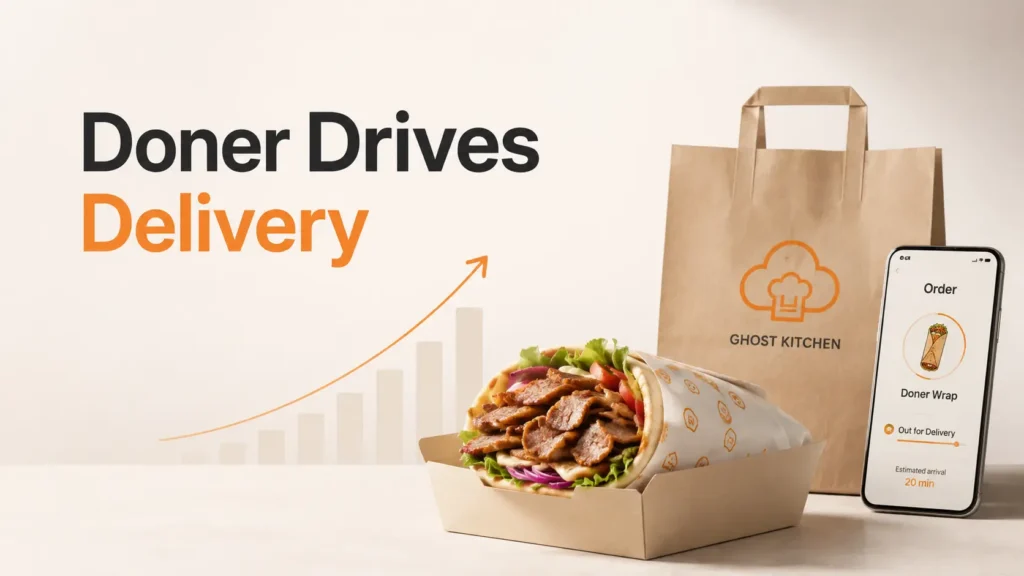
Delivery-only operators have a problem that dine-in restaurants never really face: every dollar of revenue has to survive a 20 to 30 percent commission cut before it reaches the P&L. That pressure changes what belongs on a menu. Items that hold heat, portion consistently, and cost very little per serving win. Items that need plating, timing, or a server win nothing. Doner sits firmly in the first category, and that is why it keeps showing up inside shared kitchen facilities from Los Angeles to Newark.
A vertical cone runs all service long without a cook standing over it. One operator can pull 40 or 50 portions off a single 20-pound cone, and each of those portions can be sold as a wrap, a rice bowl, a fries platter, or a salad without adding a second protein to the walk-in. For a ghost kitchen paying rent by the square foot and juggling three or four virtual brands out of one station, that ratio of output to floor space is hard to beat.
This piece breaks down exactly how delivery-first operators are structuring their doner programs: the food cost math, the multi-brand setup, packaging that survives the drive, equipment sizing for cramped shared kitchens, and the sourcing decisions that separate a profitable delivery brand from one that quietly closes after six months.
Why Doner Fits the Ghost Kitchen Model So Well
Ghost kitchens live and die by throughput per square foot. A conventional grill station needs depth, ventilation, and a cook watching individual portions. A vertical broiler occupies roughly the footprint of a small filing cabinet, cooks against a wall, and holds a full day’s protein in a ready state. The cone is essentially a self-managing hot line.
There is also the matter of labor. Most shared kitchen units run with one or two people during peak. Doner service is a shave-and-assemble motion, not a cook-to-order motion, so a single operator can push tickets during a Friday night rush without the timing chaos that comes with grilled proteins. When a delivery driver is already waiting in the corridor, shaving 6 ounces off a cone takes 15 seconds. Grilling a chicken breast takes eight minutes.
The third factor is consistency, which matters more in delivery than most people expect. A customer who never sees the kitchen judges the brand entirely on what comes out of the bag. Cones are portioned and seasoned before they ever arrive at the facility, so the flavor profile does not drift when a new hire covers a shift. That predictability is why chains built the model in the first place, and it translates cleanly to a delivery-only setup.
Finally, doner carries a cuisine identity that delivery apps reward. Mediterranean and Middle Eastern search terms have grown steadily on marketplace platforms, and a brand that clearly signals “kebab” or “shawarma” lands in a category with fewer competitors than burgers or wings in most American metros. Doner kebab is spreading across American street food menus for the same reason it works in a ghost kitchen: it is fast, familiar enough to order, and different enough to stand out.
The Delivery Math: What a Doner Cone Actually Does to Food Cost
Start with a 20-pound cone. After cooking loss and trim, an operator realistically yields between 15 and 16 pounds of usable shaved meat. At a 5-ounce portion, that is roughly 48 to 51 servings from one cone. Even at a conservative wholesale price, the protein cost per serving lands in a range that most delivery items cannot touch, and that headroom is what absorbs the marketplace commission.
The second piece of the math is the build. A wrap adds bread, sauce, onion, tomato, and lettuce. A rice bowl adds rice, which is the cheapest volume filler in any kitchen. A fries platter adds potatoes. Each of these builds costs pennies relative to the protein, but each one carries a different menu price. That spread is where delivery margin actually comes from, and it is why operators who treat doner as a single sandwich item leave money on the table.
Here is how the cost structure typically breaks down for a delivery-only doner brand:
- Protein per portion: the largest single line item, but fixed and predictable because cones are pre-portioned by weight before they reach the kitchen
- Carrier and produce: flatbread, rice, or fries plus standard garnish, usually a small fraction of the protein cost
- Sauce and finishing: garlic sauce, chili sauce, or yogurt-based dressing, cheap in bulk but critical to repeat orders
- Packaging: vented containers, foil-lined wraps, and a tamper seal, which delivery apps increasingly require
- Commission and promotion: the platform’s cut plus whatever discount is running that week, which is why gross margin targets need to sit higher than a dine-in operation
Operators who model this properly usually find that a doner bowl priced in the mid-teens holds a food cost percentage low enough to survive a 30 percent commission and still contribute. The trap is pricing the wrap too low because it feels like a sandwich. On a delivery app, customers are comparing against every other Mediterranean listing, not against a corner shop, and there is more pricing room than most new operators assume. For a fuller breakdown of the numbers behind this category, the real profitability figures for a doner kebab business are worth reviewing before setting a menu.
Building Multiple Virtual Brands From a Single Cone
The most effective ghost kitchen doner setups do not run one brand. They run three. A Turkish-style kebab brand, a Greek gyro brand, and a shawarma brand can all pull from the same broiler while presenting completely different storefronts, logos, and menu language to the customer. The customer sees three distinct restaurants. The kitchen sees one cone.
This works because the differences live in the assembly, not the protein. Swap the flatbread for pita, change the garlic sauce for tzatziki, add fries inside the wrap instead of alongside, and the same shaved beef reads as a different cuisine. Operators who understand the actual differences between doner and shawarma can build these brands honestly rather than slapping new names on identical menus, which matters when reviews start comparing them.
There is a real operational limit here, though. Every additional brand multiplies ticket volume during the same 90-minute dinner peak, and a single broiler has a finite shaving surface. Most operators find the ceiling at three or four brands per cone before service times start slipping past what the apps consider acceptable. Slipping ticket times hurt search placement on the platform, which then hurts every brand in the stack.
The smarter version of this strategy staggers the brands by daypart. A lunch-focused bowl brand and a late-night wrap brand can share one broiler without ever competing for the same rush. That kind of scheduling is difficult in a traditional restaurant and trivial in a ghost kitchen, where nobody is walking through the door expecting the sign on the building to match the food.
Menu Engineering: Turning One Protein Into Fifteen Order Options
A tight menu with deep customization outperforms a broad menu with shallow options in delivery. The reason is prep, not preference. Every additional SKU in a ghost kitchen means another pan in a reach-in that has to be tracked, rotated, and wasted if it does not sell. Doner sidesteps this because the variety lives in how the protein is presented rather than in how many proteins are held.
The standard framework most operators land on has four carriers and two or three proteins. Wrap, bowl, platter, and salad, each available with beef, chicken, or a mixed option. That is twelve base items from two cones, before add-ons. Layer on fries, extra meat, halloumi, or a second sauce, and the average order value climbs without a single new prep item entering the kitchen.
Bowls deserve special attention in a delivery context. They travel better than wraps, they photograph well for the app listing, they carry a higher price point, and they let customers customize without breaking the build. Several operators report bowls outselling wraps by a wide margin once both are listed side by side, which runs counter to what happens in a walk-up shop. Recipes like a chicken doner rice platter or a beef shawarma rice platter show why the format holds up so well in a container.
Add-ons are the quiet profit center. A two dollar upcharge for extra meat costs the kitchen a fraction of that and takes four seconds to execute. Sauce upgrades, side portions of fries, and a drink attach do more for delivery margin than raising base prices, because they do not affect how the item looks in a price-sorted list on the app.
Packaging and Hold Time: Keeping Doner Intact for 25 Minutes
Nothing destroys a delivery brand faster than a wrap that arrives steamed into paste. Doner produces moisture and fat while it rests, and a sealed container turns both into condensation. The operators who solve this early keep their ratings above four and a half stars. The ones who do not spend their marketing budget on refunds.
The core principle is separation and ventilation. Sauce goes in a portion cup rather than on the meat whenever the ticket allows. Fries go in their own vented sleeve rather than under the protein. Wraps get foil-lined paper rather than plain paper, then a vented clamshell rather than a sealed bag. None of this is expensive, but all of it has to be decided before the first order comes in, not after the first complaint.
A practical packaging checklist for a delivery doner program looks like this:
- Vented rigid bowls for rice and salad builds, since a flat lid with no vent traps steam directly above the protein
- Foil-lined wrap paper to hold heat without letting the flatbread absorb moisture from below
- Separate sauce cups with secure lids, listed clearly so the driver does not shake the bag
- Fries in an open-top sleeve, never buried under hot meat inside a closed container
- Tamper-evident seals on every bag, which most major platforms now expect and some require
- Bag inserts or stickers with reheating notes, since these cost almost nothing and reduce negative reviews on long-distance orders
Hold time is the other half of the equation. Shaved meat should go from broiler to container, not from broiler to hotel pan to container. Meat that sits in a pan for 20 minutes loses the crisp exterior that makes doner worth ordering, and the difference is obvious by the time it reaches a customer across town. Shaving to order is slower on paper and better in practice, and it is one of the few places where a delivery kitchen should resist the urge to batch.
Equipment and Space Planning in a Shared Kitchen
Shared kitchen units are small. Many run between 150 and 250 square feet, with a fixed hood, limited gas connections, and no room to negotiate. That constraint drives the equipment decision more than anything else, and it is where a lot of first-time operators get it wrong by buying too large.
Machine sizing should follow projected daily volume, not ambition. A three-burner unit handling a 45-pound cone makes sense for a high-volume location doing 200 covers a day. A delivery-only brand starting at 40 to 60 orders a day is better served by a smaller two-burner unit that reaches temperature faster, wastes less gas, and does not leave half a cone unsold at close. Matching the machine size to daily meat volume prevents both waste and the equally expensive mistake of running out during peak.
Electric versus gas is the second decision, and in shared facilities it is often made for you. Many commissary buildings restrict gas lines to designated stations, which pushes delivery operators toward electric broilers. Electric units heat more evenly and are simpler to certify, though they generally cook a little slower. Either way, the unit needs to carry proper certification for the facility to approve it, and NSF-certified doner equipment is usually a non-negotiable requirement in a commissary lease.
Cleaning access also matters more in a shared space than most people plan for. Facilities enforce cleaning standards strictly because multiple tenants share the same hood and the same inspection. A broiler with removable drip trays and accessible burner covers saves real time at close, and there are ways to clean a vertical grill without losing an hour that are worth building into the closing checklist from day one.
The last piece is knife and slicer choice. Manual knives are cheaper and give better control on the first few cones of the day. Electric slicers are faster during a rush and more consistent across staff. Delivery kitchens with high peak concentration usually justify the slicer, while lower-volume brands do fine with a good doner knife and one trained hand.
Sourcing: Pre-Cooked Cones vs. Raw Stacks for Delivery-Only Operations
Raw stacked cones deliver the best texture and the most authentic result. They also require a longer cook, a more experienced operator, and tighter food safety discipline. For a ghost kitchen with a single person on shift and three brands firing at once, that combination is a risk rather than a feature.
Pre-cooked frozen cones solve most of that. They reach service temperature faster, they carry a documented cook history, and they eliminate the undercooked-core problem that catches inexperienced operators. The trade-off is a slightly softer texture, though the gap has narrowed considerably as manufacturing has improved. Many delivery-first operators start with pre-cooked frozen doner precisely because it removes a variable from a kitchen that already has too many.
Storage is the constraint nobody accounts for in the lease negotiation. Shared kitchens allocate freezer space by the shelf, not by the pallet, and a stack of 20-pound cones eats through that allocation fast. Ordering cadence has to match storage rather than price breaks, which sometimes means paying slightly more per cone to avoid renting extra freezer space. Following sound storage and thawing practice for frozen cones also prevents the slow quality decline that comes from repeated partial thaws.
Supplier reliability outranks price for a delivery brand. A missed delivery in a restaurant means a specials board. A missed delivery in a ghost kitchen means turning off three storefronts on two platforms, which damages ranking for weeks afterward. Operators buying in volume should read up on what to know before buying doner in bulk and secure a backup source before they need one.
How Ghost Kitchen Operators Market a Doner Brand on Delivery Apps
Visibility on a marketplace is mostly mechanical. Photos, item names, category tags, and response time drive placement more than anything a marketing agency will sell you. A doner brand that names its hero item “Classic Beef Doner Wrap” will be found by fewer people than one that names it “Beef Doner Kebab Wrap with Garlic Sauce,” because the second version matches how customers actually search.
Photography carries disproportionate weight for this category. Shaved meat photographs poorly under flat lighting and beautifully in a bowl with visible garnish, rice, and sauce contrast. Operators who shoot three or four hero images properly, once, tend to see conversion improvements that outlast every promotion they run.
Review management is the other lever. Doner brands accumulate a predictable set of complaints: not enough sauce, meat was dry, wrap fell apart. Each of those maps to a specific operational fix rather than a customer service reply. Fixing the underlying cause and then responding publicly does more for ranking than discounting, and it costs nothing.
Promotions should be structured around attach rate rather than discount depth. A free side of fries over a minimum order raises average ticket. A 30 percent off sitewide discount trains customers to wait for the next one and destroys the margin the cone earned in the first place.
Mistakes That Quietly Kill a Delivery Doner Brand
Overbuilding the menu is the most common one. A new operator adds falafel, then hummus, then a lamb chop platter, and within two months the walk-in holds nine items that each sell twice a week. Waste climbs, prep time doubles, and the item that was actually profitable gets buried on the third screen of the app listing.
Buying the wrong machine is close behind. A unit sized for a busy storefront burns gas and dries the cone surface when it runs at low volume, which is exactly what a delivery brand does between rushes. Matching equipment to reality rather than to a five-year plan keeps quality steady in the months that actually determine whether the brand survives.
Ignoring the bag is the third. Kitchens that obsess over the cone and treat packaging as an afterthought are optimizing the part of the experience the customer never sees while neglecting the only part they do. In delivery, the container is the plate, the room, and the service, all at once.
The last one is cone management. Lighting a full cone for a slow Tuesday and letting the exterior dry out over four hours costs more in quality and waste than running a smaller cone would have. Operators who track daily volume and adjust cone size accordingly protect both margin and reviews, and the guidance on choosing the right meat cone size applies even more strictly when there is no walk-in traffic to absorb the surplus.
Frequently Asked Questions
Is doner profitable for a ghost kitchen after delivery commissions?
In most cases, yes, because the protein cost per portion is low relative to the menu prices that bowls and platters can support. A cone yielding close to 50 portions gives enough gross margin room to absorb a 25 to 30 percent commission and still contribute, provided the operator prices bowls and add-ons properly rather than treating everything as a sandwich.
Do I need a gas line to run doner in a shared kitchen?
Not necessarily. Electric vertical broilers are widely used in commissary facilities where gas connections are limited or restricted to specific stations. Electric units heat evenly and are simpler to get approved, though they typically cook slightly slower than gas equivalents.
How many virtual brands can run off one doner machine?
Three to four is the practical ceiling for most single-broiler setups, and that assumes the brands are not all peaking at the same hour. Beyond that, ticket times during dinner rush start slipping, which affects platform ranking for every brand sharing the station.
Does doner hold up well in delivery packaging?
It does, as long as steam is managed. Vented containers, sauce served separately, foil-lined wrap paper, and fries kept out of the main container solve most of the problem. Meat shaved to order rather than held in a pan makes a noticeable difference by the time the bag reaches the customer.
Should a delivery brand use pre-cooked or raw cones?
Pre-cooked frozen cones are the safer starting point for delivery-only kitchens because they cook faster, carry documented handling, and reduce the risk of undercooking during a rush. Operators with an experienced cook and steady volume can move to raw stacks later for a texture upgrade.
What sells better in delivery, wraps or bowls?
Bowls usually win. They travel more reliably, photograph better on app listings, support a higher price point, and handle customization without falling apart. Wraps remain important for late-night orders and lower price-point entries, so most menus carry both.
How much space does a doner setup need?
Less than most people expect. A two or three burner vertical broiler occupies roughly the footprint of a narrow cabinet, though clearance requirements and hood placement in the facility usually dictate the final layout more than the machine itself.
Getting a Delivery Doner Program Off the Ground
The operators seeing real results from doner in ghost kitchens are not doing anything exotic. They picked a machine sized to actual volume, sourced cones from a supplier who shows up, built four carriers off one protein, solved packaging before launch, and resisted the urge to expand the menu every time sales dipped.
That discipline is what the model rewards. Delivery strips away everything except the food in the bag and the time it took to get there, and a vertical cone happens to be very good at both. In short, doner works in a ghost kitchen because it turns a small footprint and one pair of hands into a menu deep enough to compete with operations three times its size.
If you are planning a delivery brand around this category, start with the equipment and sourcing decisions rather than the branding. You can review doner kebab equipment options and wholesale doner and shawarma cones to size a setup that matches the volume you expect in your first six months, not the volume you hope for in year three.